
A properly installed garage door protects your home, improves curb appeal, and operates safely for 15-30 years. Whether you’re building new construction in Valley Springs or replacing an aging door that’s seen better days, understanding the installation process helps you make informed decisions and avoid costly mistakes.
Garage door installation involves more than hanging panels on tracks. It requires precise measurements, proper spring tensioning, and safety system calibration that directly impacts your family’s security. Getting this right the first time saves thousands in repairs and prevents dangerous malfunctions.
This guide walks you through every aspect of garage door installation—from recognizing when replacement makes sense to choosing materials suited for California’s climate, understanding true costs, and selecting a qualified contractor in Valley Springs.
What Is Garage Door Installation?
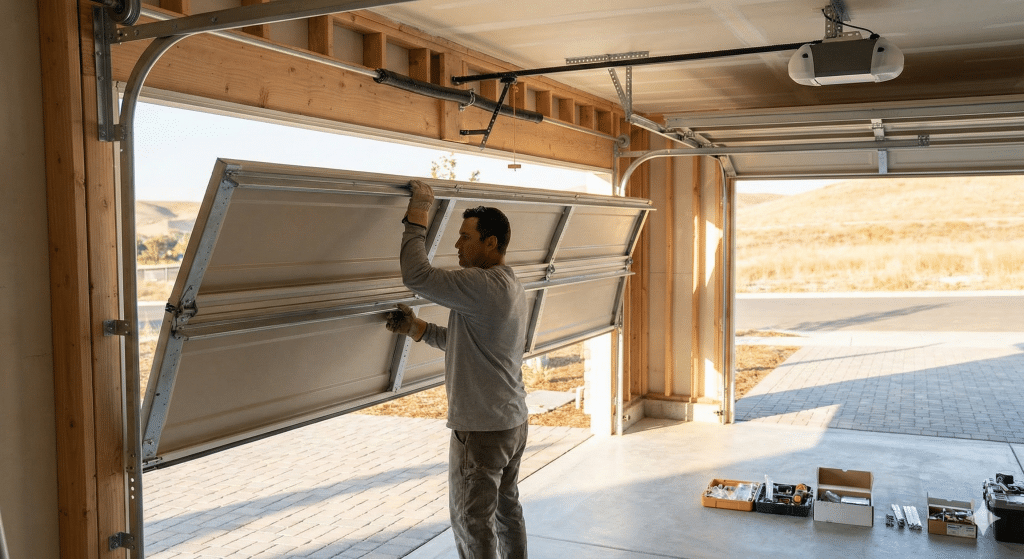
Garage door installation encompasses the complete process of fitting a new door system to your home’s garage opening. This includes mounting tracks, assembling panels, installing springs under precise tension, connecting the opener motor, and calibrating safety features. Professional installation typically takes 3-6 hours for a standard residential door, though complex projects may require a full day.
The scope varies significantly based on your situation. New construction installations start from scratch with no existing infrastructure. Replacement projects involve removing old components before installing new ones. Each scenario presents unique challenges that affect timeline, cost, and complexity.
Types of Garage Door Installation Projects
New Construction Installation occurs when building a home or adding a garage. Contractors work with fresh framing, allowing optimal positioning of tracks and headers. This scenario offers the most flexibility for door size and style selection since no existing constraints limit options.
Replacement Installation is the most common project type. Homeowners upgrade aging doors, improve energy efficiency, or update aesthetics. Replacement requires careful assessment of existing framing conditions and may reveal hidden issues like rot or structural inadequacy that need addressing before the new door goes in.
Retrofit Installation involves modifying an existing opening to accommodate a different door size or style. This might mean widening an opening for a larger vehicle, converting a single door to a double, or adjusting header height. Retrofit projects require structural modifications and typically cost more than straightforward replacements.
Key Components of a Garage Door System
Understanding what makes up your garage door system helps you communicate effectively with contractors and recognize quality workmanship.
Door Panels and Materials form the visible face of your garage door. Panels connect through hinges that allow the door to bend as it travels along the curved track section. Material choice—steel, wood, aluminum, fiberglass, or composite—affects durability, insulation value, maintenance requirements, and cost.
Springs (Torsion vs. Extension) counterbalance the door’s weight, making it possible to lift a 150-300 pound door with minimal effort. Torsion springs mount above the door on a metal shaft and twist to store energy. Extension springs run along the horizontal tracks and stretch when the door closes. Torsion systems last longer and operate more smoothly, making them the preferred choice for most installations.
Tracks and Rollers guide the door’s movement. Vertical tracks attach to the door frame, curving into horizontal tracks that run along the ceiling. Rollers—typically steel or nylon—ride inside these tracks. Nylon rollers operate more quietly and don’t require lubrication, while steel rollers cost less but create more noise.
Opener and Motor Systems automate door operation. Modern openers use belt drives, chain drives, or screw drives to move the door. Belt drives offer the quietest operation. Chain drives provide reliable, economical performance. Smart openers connect to home automation systems and allow smartphone control from anywhere.
Safety Features and Sensors prevent injuries and property damage. Federal law requires all garage door openers manufactured after 1993 to include auto-reverse mechanisms. Photo-eye sensors detect objects in the door’s path and trigger reversal. These components require precise alignment during installation.
How to Know When You Need Garage Door Installation
Recognizing when repair no longer makes sense saves money long-term. Some problems indicate your door has reached the end of its useful life, while others suggest replacement offers better value than continued repairs.
Warning Signs Your Garage Door Needs Replacement
Excessive Noise During Operation often signals worn components throughout the system. While some noise issues resolve with lubrication or roller replacement, grinding, scraping, or banging sounds that persist after maintenance indicate structural problems. Severely worn tracks, damaged panels, or failing springs create noise that only worsens over time.
Slow or Uneven Movement suggests balance problems or motor strain. A properly balanced door should stay in place when manually lifted halfway and released. If it falls or rises, the spring system needs attention. When the opener struggles to lift the door or movement appears jerky, the system is working harder than designed, accelerating wear on all components.
Visible Damage or Warping compromises both function and security. Dented panels may prevent proper sealing. Warped sections create gaps that allow weather infiltration and reduce energy efficiency. Rust on steel doors indicates protective coating failure that will spread without intervention. Cracked wood panels invite moisture damage and pest entry.
Frequent Breakdowns and Repairs signal a system past its prime. If you’ve called for service multiple times in the past year, those repair costs add up quickly. A door requiring constant attention will continue demanding resources. At some point, investing in replacement delivers better value than perpetual repairs.
Safety Sensor Malfunctions create serious hazards. When sensors fail to detect obstacles or trigger false reversals, the door becomes unpredictable. While sensor replacement is straightforward, repeated sensor issues on older systems often indicate broader electrical problems throughout the opener.
Age and Lifespan Considerations
Average Garage Door Lifespan by Material varies significantly. Steel doors typically last 15-30 years with proper maintenance. Wood doors require more upkeep but can last 20-30 years when well-maintained. Aluminum doors average 15-20 years. Fiberglass doors last 15-20 years but may become brittle in extreme temperatures. These ranges assume normal residential use of 3-5 cycles daily.
When Repair vs. Replacement Makes Sense depends on several factors. Generally, if repair costs exceed 50% of replacement cost, installation makes better financial sense. Doors older than 15 years with significant problems warrant replacement consideration. Newer doors with isolated issues—a broken spring, damaged panel, or malfunctioning opener—typically justify repair.
Consider energy efficiency when making this decision. Older uninsulated doors waste heating and cooling energy. Upgrading to an insulated door can reduce energy costs enough to offset some installation expense over time.
Garage Door Installation Process Step-by-Step
Understanding the installation process helps you prepare your space, set realistic expectations, and recognize quality workmanship. Professional installers follow systematic procedures that ensure safe, reliable operation.
Pre-Installation Assessment and Measurements
Measuring the Opening requires precision. Installers measure width at the floor and at the widest point, height on both sides, and headroom above the opening. Side room—the space beside the opening—determines track placement. Backroom—the depth of the garage—affects horizontal track length. Inaccurate measurements lead to doors that don’t fit or operate properly.
Evaluating Structural Requirements identifies potential issues before installation day. The header above the opening must support the door’s weight plus the stress of spring tension. Wall framing needs adequate strength for track mounting. Ceiling structure must accommodate horizontal tracks and opener mounting. Older homes sometimes require reinforcement before installation can proceed.
Selecting the Right Door Size and Style balances practical needs with aesthetic preferences. Standard single-car doors measure 8-9 feet wide by 7-8 feet tall. Double-car doors typically span 16 feet wide. Your vehicle dimensions, storage needs, and garage use patterns influence size selection. Style should complement your home’s architecture while meeting functional requirements.
Removing the Old Garage Door (If Applicable)
Safety Precautions take priority during removal. The existing door remains under spring tension until properly released. Installers disconnect the opener, secure the door in the down position, and systematically release tension before removing components. This phase presents the highest injury risk of the entire project.
Spring Tension Release requires specialized knowledge and tools. Torsion springs store tremendous energy—enough to cause serious injury or death if released improperly. Professional installers use winding bars designed for this purpose and follow specific procedures to safely discharge stored energy. This is not a DIY task under any circumstances.
Proper Disposal Methods address environmental and practical concerns. Old doors contain materials requiring appropriate handling. Steel components can be recycled. Wood may go to landfills or be repurposed. Some installers include removal and disposal in their pricing; others charge separately. Clarify this before signing any contract.
Installing the New Garage Door
Track Assembly and Mounting establishes the framework for door movement. Vertical tracks attach to the door frame using lag bolts or through-bolts depending on framing material. Horizontal tracks connect to vertical sections with curved track pieces. Precise leveling and alignment at this stage prevents operational problems later. Tracks must be parallel and properly spaced for smooth roller travel.
Panel Installation Sequence builds the door from bottom to top. The bottom panel goes in first, with rollers inserted into the vertical tracks. Each subsequent panel connects to the one below through hinges. As panels stack, the door takes shape. Installers check alignment continuously, making adjustments before proceeding to the next panel.
Spring Installation and Tensioning brings the system to life. For torsion springs, the spring mounts on a shaft above the door. Installers wind the spring using calibrated turns based on door weight and spring specifications. Proper tensioning balances the door’s weight, allowing smooth operation without straining the opener. Too little tension makes the door heavy; too much creates dangerous conditions.
Opener Installation and Programming completes the automation. The opener unit mounts to the ceiling, centered above the door. A rail connects the opener to a bracket on the door. Installers adjust travel limits—how far the door opens and closes—and force settings that determine how much resistance triggers reversal. Programming includes setting remote frequencies and connecting smart features.
Final Testing and Safety Checks
Balance Testing verifies proper spring adjustment. With the opener disconnected, the door should lift smoothly with minimal effort and stay in place when released at any point along its travel. A door that falls or rises indicates balance problems requiring spring adjustment.
Safety Reversal Testing confirms protection systems work correctly. Installers place an object in the door’s path and verify the door reverses upon contact. Photo-eye sensors get tested by breaking the beam during closing—the door should reverse immediately. These tests must pass before the installation is complete.
Weatherseal Inspection ensures proper sealing against elements. Bottom seals should contact the floor evenly across the entire width. Side and top weatherstripping should compress slightly when the door closes, creating a barrier against drafts, rain, and pests. Gaps indicate adjustment needs or seal replacement.
Choosing the Right Garage Door for Your Valley Springs Home
Valley Springs homeowners face specific considerations when selecting garage doors. The region’s climate, architectural styles, and practical needs all influence the best choice for your property.
Garage Door Materials Comparison
Steel Garage Doors dominate the residential market for good reason. They offer excellent durability, low maintenance requirements, and broad price range options. Steel resists denting better than aluminum and won’t warp like wood. Modern steel doors come in numerous styles and can mimic wood grain appearance. Rust resistance depends on coating quality—look for doors with primer and multiple paint layers.
Wood Garage Doors deliver unmatched natural beauty and can be custom-built to any specification. They suit traditional and craftsman-style homes particularly well. However, wood requires regular maintenance—staining or painting every few years, plus attention to any moisture damage. Valley Springs’ dry summers and wet winters stress wood surfaces, making maintenance essential for longevity.
Aluminum Garage Doors work well for contemporary homes and coastal-influenced designs. They resist rust completely and weigh less than steel, reducing strain on openers and springs. However, aluminum dents more easily than steel and provides less insulation. The material suits mild climates better than areas with extreme temperatures.
Fiberglass Garage Doors resist denting and won’t rust or rot. They can be molded to resemble wood grain at lower cost than real wood. However, fiberglass becomes brittle over time, especially with UV exposure. It may crack in very cold temperatures—less concern in Valley Springs than in mountain communities, but worth considering.
Composite/Vinyl Garage Doors combine the appearance of wood with superior weather resistance. These doors won’t rot, warp, or require painting. They resist dents better than aluminum and insulate better than single-layer steel. Higher upfront cost balances against reduced maintenance expense over the door’s life.
Insulation Options and Energy Efficiency
R-Value Explained measures thermal resistance—how well the door prevents heat transfer. Higher R-values indicate better insulation. Uninsulated doors have essentially no R-value. Basic insulated doors range from R-6 to R-9. Premium insulated doors reach R-12 to R-18 or higher. The right R-value depends on your garage’s use and connection to living spaces.
Single-Layer vs. Double-Layer vs. Triple-Layer construction affects both insulation and durability. Single-layer doors consist of just the exterior skin—no insulation, minimal noise reduction. Double-layer doors add insulation behind the exterior, improving thermal performance and reducing noise. Triple-layer doors sandwich insulation between exterior and interior steel skins, providing maximum insulation, quietest operation, and greatest durability.
Climate Considerations for Valley Springs favor moderate insulation levels. Summer temperatures regularly exceed 90°F, while winter nights can drop below freezing. If your garage connects to living space or you use it as a workshop, insulated doors maintain more comfortable temperatures and reduce HVAC load. An R-12 to R-16 door suits most Valley Springs applications well.
Style and Design Options
Traditional Raised Panel doors feature rectangular sections with raised borders. This classic style complements ranch homes, colonials, and most traditional architecture. Available in short or long panel configurations, raised panel doors work with virtually any home style and represent the most economical option in most materials.
Carriage House Style doors evoke the appearance of old swing-out barn doors while operating as modern overhead doors. Decorative hardware, crossbuck patterns, and window arrangements create rustic charm. This style suits farmhouse, craftsman, and Mediterranean-influenced homes common in Calaveras County.
Contemporary/Modern doors feature clean lines, minimal ornamentation, and often incorporate glass panels. Full-view aluminum and glass doors maximize natural light. Flush panel designs create sleek, uninterrupted surfaces. These doors complement modern architecture and can update the appearance of mid-century homes.
Custom Design Options allow unlimited creativity. Custom doors can match specific architectural details, incorporate unique materials, or achieve dimensions standard doors can’t accommodate. Custom work costs significantly more but delivers precisely what you envision. Allow extra lead time for custom orders—often 6-12 weeks versus days for standard doors.
Garage Door Installation Costs in Valley Springs, CA
Understanding cost factors helps you budget accurately and evaluate quotes fairly. Prices vary significantly based on your choices and project complexity.
Factors That Affect Installation Cost
Door Size and Type establishes the baseline. Single-car doors cost less than double-car doors. Standard sizes cost less than custom dimensions. A basic 16×7 double door costs more than a 9×7 single door simply due to material quantity.
Material Selection dramatically impacts price. Steel doors range from budget-friendly to premium depending on gauge thickness and finish quality. Wood doors cost significantly more than steel. Aluminum and fiberglass fall in the mid-range. Composite doors command premium prices but reduce long-term maintenance costs.
Insulation Level adds cost proportional to R-value. Uninsulated doors cost least. Each step up in insulation—single to double to triple layer—increases price. The energy savings and comfort benefits may justify higher insulation costs, especially for attached garages.
Opener Features range from basic to sophisticated. Standard chain-drive openers cost less than belt-drive models. Smart openers with WiFi connectivity, battery backup, and home automation integration cost more. Consider which features you’ll actually use rather than paying for capabilities you won’t need.
Labor and Complexity vary by project scope. Straightforward replacements on properly framed openings cost less than projects requiring structural modifications. Removing old doors, disposing of materials, and addressing unexpected issues all affect labor costs. Two-story installations requiring special equipment cost more than ground-level work.
Average Price Ranges for Valley Springs
Budget-Friendly Options typically range from $800-$1,500 installed for a single-car door or $1,200-$2,200 for a double-car door. These prices include basic uninsulated or minimally insulated steel doors with standard openers. Budget options serve well for detached garages, rental properties, or situations where appearance matters less than function.
Mid-Range Options fall between $1,500-$3,000 for single doors and $2,200-$4,500 for double doors installed. This range includes insulated steel doors with better finishes, carriage house styles, and quality belt-drive openers. Most Valley Springs homeowners find their ideal balance of quality and value in this range.
Premium Options start around $3,000 for single doors and $4,500 for doubles, with custom wood or high-end composite doors reaching $8,000-$15,000 or more installed. Premium pricing reflects superior materials, custom designs, advanced opener technology, and extended warranties.
Getting Accurate Estimates
What to Ask Your Contractor ensures you compare quotes fairly. Request itemized estimates showing door cost, opener cost, hardware, and labor separately. Ask what’s included—removal of old door, disposal, weatherstripping, programming remotes. Clarify warranty terms for both products and labor. Inquire about permits if required and whether permit costs are included.
Get at least three written estimates for significant projects. Be wary of quotes dramatically lower than others—they may indicate inferior products, inexperienced installers, or hidden costs that appear later. The lowest price rarely represents the best value when quality and reliability matter.
DIY vs. Professional Garage Door Installation
The internet offers countless DIY garage door installation tutorials. Before attempting this project yourself, understand the real risks and benefits of each approach.
Risks of DIY Garage Door Installation
Spring Tension Dangers represent the most serious concern. Garage door springs store enough energy to cause severe injury or death. Torsion springs require specialized winding bars and precise technique. Extension springs can snap violently if mishandled. Emergency rooms treat thousands of garage door spring injuries annually. This single factor makes professional installation worthwhile for most homeowners.
Improper Balance Issues create ongoing problems. A door that’s not properly balanced strains the opener, wears components unevenly, and may not seal correctly. Achieving proper balance requires understanding spring calculations, having appropriate tools, and making precise adjustments. Mistakes here lead to premature component failure and repeated service calls.
Warranty Implications often surprise DIY installers. Many door and opener manufacturers void warranties if products aren’t professionally installed. A warranty claim denied due to improper installation leaves you paying full price for replacement parts that should have been covered. Read warranty terms carefully before deciding to self-install.
Benefits of Professional Installation
Safety Expertise protects you and your family. Professional installers handle spring tension daily and understand the risks intimately. They carry insurance covering injuries and property damage. Their experience helps them recognize and avoid dangerous situations that might not occur to occasional DIYers.
Proper Tools and Equipment ensure correct installation. Professionals own specialized tools—spring winding bars, track gauges, laser levels—that most homeowners don’t have and wouldn’t use often enough to justify purchasing. The right tools make the difference between adequate and excellent installation quality.
Warranty Protection preserves your investment. Professional installation maintains manufacturer warranties. Many installers also warranty their labor, covering callbacks for adjustment or correction at no additional cost. This protection provides peace of mind that DIY installation cannot match.
Code Compliance matters more than many homeowners realize. Building codes specify requirements for garage door installation, including safety features, structural attachments, and electrical connections. Professional installers know local codes and ensure compliance. Unpermitted or non-compliant work can create problems when selling your home.
Garage Door Maintenance After Installation
A new garage door represents a significant investment. Proper maintenance extends its lifespan, maintains safe operation, and prevents costly repairs.
Recommended Maintenance Schedule
Monthly Visual Inspections catch problems early. Look at springs, cables, rollers, and pulleys for signs of wear. Check weatherstripping for damage or gaps. Listen for unusual sounds during operation. Note any changes in how the door moves or sounds—these often indicate developing issues.
Quarterly Lubrication keeps components moving smoothly. Apply garage door lubricant (not WD-40, which is a solvent, not a lubricant) to hinges, rollers, springs, and the opener’s drive mechanism. Lubrication reduces friction, quiets operation, and extends component life. Wipe away excess to prevent dripping.
Annual Professional Tune-Ups address what homeowners can’t. Technicians check spring tension, adjust balance, tighten hardware, test safety systems, and identify wear patterns. Annual service typically costs $75-$150 and often prevents repairs costing many times more. Consider scheduling tune-ups before extreme weather seasons.
Seasonal Adjustments account for temperature changes. Metal components expand and contract with temperature swings. Doors that seal perfectly in summer may have gaps in winter, or vice versa. Adjust bottom seal contact and weatherstripping compression as seasons change to maintain proper sealing.
Common Maintenance Tasks Homeowners Can Perform
Cleaning Tracks removes debris that impedes smooth operation. Wipe tracks with a damp cloth to remove dirt, leaves, and cobwebs. Don’t lubricate tracks—rollers should roll, not slide. Clean tracks allow rollers to move freely without binding or jumping.
Testing Safety Features should happen monthly. Place a roll of paper towels in the door’s path and close it—the door should reverse upon contact. Wave an object through the photo-eye beam during closing—the door should reverse immediately. If either test fails, stop using the door and call for service.
Lubricating Moving Parts reduces wear and noise. Focus on metal hinges, roller bearings (not nylon roller surfaces), springs, and the opener rail. A few drops at each point suffices—over-lubrication attracts dirt and creates mess. Avoid getting lubricant on tracks or photo-eye lenses.
Inspecting Weatherstripping maintains energy efficiency and pest exclusion. Check bottom seals for cracks, tears, or compression loss. Examine side and top weatherstripping for gaps or deterioration. Replace damaged weatherstripping promptly—it’s inexpensive and easy to install.
When to Call a Professional for Service
Spring Repairs or Replacement always require professional attention. Never attempt to adjust, repair, or replace garage door springs yourself. The stored energy in these components makes them extremely dangerous. Professional spring replacement typically costs $150-$350 including parts and labor—far less than an emergency room visit.
Track Realignment involves loosening mounting hardware, repositioning tracks, and re-securing everything while maintaining precise alignment. Improper track adjustment causes binding, uneven wear, and potential door derailment. Professionals have the tools and experience to align tracks correctly.
Opener Motor Issues may indicate repairable problems or end-of-life failure. Professionals can diagnose whether motor replacement, gear repair, or circuit board service makes sense. They can also determine if the opener should be replaced entirely rather than repaired.
Cable Replacement presents similar dangers to spring work. Cables operate under tension and can cause serious injury if they snap during handling. Frayed or damaged cables require immediate professional attention—continued operation risks sudden failure.
Garage Door Safety Features and Requirements
Modern garage doors include multiple safety systems required by federal law. Understanding these features helps you ensure your door operates safely and complies with regulations.
Federal Safety Standards (UL 325)
UL 325 establishes safety requirements for garage door openers sold in the United States. Since 1993, all residential garage door openers must include entrapment protection—systems that detect obstacles and reverse the door. Openers must include at least two different types of entrapment protection, typically a mechanical auto-reverse and photo-eye sensors.
These standards exist because garage doors cause thousands of injuries annually. A closing door exerts hundreds of pounds of force—enough to cause serious injury or death. Compliance isn’t optional; it’s legally required and essential for family safety.
Photo-Eye Sensors
Photo-eye sensors mount near the floor on either side of the door opening. One unit transmits an infrared beam; the other receives it. When anything breaks this beam during door closing, the door immediately reverses direction. Sensors must be aligned precisely—even slight misalignment causes malfunction.
Keep sensor lenses clean and check alignment periodically. Sunlight can sometimes interfere with sensor operation; shading or repositioning may help. If sensors blink or the door won’t close, alignment or obstruction issues are likely causes.
Auto-Reverse Mechanisms
Auto-reverse systems detect physical resistance during closing. If the door contacts an object, it reverses direction. Sensitivity adjustment controls how much resistance triggers reversal. Settings too sensitive cause false reversals; settings too insensitive may not protect adequately.
Test auto-reverse monthly by placing a 2×4 flat on the floor in the door’s path. The door should reverse upon contacting the board. If it doesn’t, adjust sensitivity or call for service immediately.
Manual Release Features
Every garage door opener includes a manual release—typically a red cord hanging from the opener rail. Pulling this cord disconnects the door from the opener, allowing manual operation during power outages or opener failures. Know where your release is and how to use it before you need it.
After using manual release, the door must be reconnected to the opener. This usually involves moving the door to align the trolley, then operating the opener to re-engage. Consult your opener manual for specific reconnection procedures.
How to Choose a Garage Door Installation Contractor in Valley Springs
Selecting the right contractor ensures quality installation, fair pricing, and reliable warranty support. Take time to evaluate options before committing.
Questions to Ask Before Hiring
Start with basics: How long have you been installing garage doors? Do you specialize in residential work? What brands do you install? Experience matters—installers who’ve completed hundreds of projects handle challenges better than newcomers.
Ask about the installation process: Who will perform the work? Will it be employees or subcontractors? How long will installation take? What preparation do I need to do? Understanding expectations prevents surprises on installation day.
Discuss specifics: What’s included in your quote? Do you handle permits? What happens if you discover problems during installation? How do you handle warranty claims? Clear answers indicate professional operations.
Licensing and Insurance Requirements
California requires contractor licensing for garage door installation exceeding $500 in combined labor and materials. Verify license status through the Contractors State License Board. Licensed contractors have demonstrated competency and maintain bonds protecting consumers.
Insurance protects you from liability. Workers’ compensation covers installer injuries on your property. General liability covers property damage during installation. Request certificates of insurance and verify coverage is current. Uninsured contractors expose you to significant financial risk.
Reading Reviews and Checking References
Online reviews provide insight into customer experiences. Look for patterns rather than individual complaints—every business has occasional unhappy customers. Pay attention to how companies respond to negative reviews; professional responses indicate accountability.
Request references from recent local installations. Contact references and ask: Was the work completed on schedule? Did the final price match the estimate? How did they handle any problems? Would you hire them again? Direct feedback from past customers reveals more than polished marketing.
Understanding Warranties and Guarantees
Garage door warranties typically include separate coverage for different components. Door panels may carry 10-year to lifetime warranties against defects. Springs often have 1-3 year warranties. Openers typically include 1-5 year coverage. Understand what each warranty covers and excludes.
Labor warranties vary by installer. Some offer 1 year coverage; others provide 5 years or more. Labor warranties cover callbacks for adjustment, realignment, or correction of installation issues. Longer labor warranties indicate installer confidence in their work quality.
Get warranty terms in writing before installation. Verbal promises mean nothing when you need service. Written warranties specify coverage, duration, claim procedures, and exclusions. Keep warranty documents with your home records for future reference.
Conclusion
Garage door installation involves complex decisions about materials, insulation, styles, and contractors. The right choices deliver decades of reliable operation, enhanced curb appeal, and improved energy efficiency. Understanding the process—from recognizing when replacement makes sense through final safety testing—empowers you to make informed decisions and recognize quality workmanship.
Professional installation protects your investment through proper spring tensioning, precise alignment, and code-compliant safety systems. The risks of DIY installation—particularly spring-related injuries—far outweigh potential savings. Qualified contractors bring expertise, proper tools, and warranty protection that ensure your new door performs as designed.
We invite Valley Springs homeowners to contact Afford-A-Door Inc for expert garage door installation services. Our team provides honest assessments, quality workmanship, and reliable support throughout your door’s lifespan. Call us today for a free estimate and discover why your neighbors trust us with their garage door needs.
Frequently Asked Questions About Garage Door Installation
How long does garage door installation take?
Most residential garage door installations take 3-6 hours for experienced professionals. Complex projects involving structural modifications, custom doors, or difficult access may require a full day. Replacement installations typically complete faster than new construction since infrastructure already exists.
Do I need a permit for garage door installation in Valley Springs?
Permit requirements vary by project scope. Simple like-for-like replacements often don’t require permits. Projects involving structural changes, electrical work, or size modifications typically do. Check with Calaveras County Building Department or ask your contractor about permit requirements for your specific project.
What is the best garage door material for California weather?
Steel doors with proper insulation perform excellently in Valley Springs’ climate. They handle temperature swings well, resist warping, and require minimal maintenance. For homeowners prioritizing aesthetics, composite doors offer wood-like appearance with superior weather resistance. Avoid uninsulated doors if your garage connects to living space.
How often should I service my garage door after installation?
Perform monthly visual inspections and safety tests yourself. Lubricate moving parts quarterly. Schedule professional tune-ups annually—ideally before summer heat or winter cold stresses components. This maintenance schedule maximizes door lifespan and catches problems before they become expensive repairs.
Can I keep my old garage door opener with a new door?
Sometimes. If your existing opener is relatively new, properly sized for the new door’s weight, and functions well, it may work with your new door. However, older openers may lack current safety features or sufficient power for heavier insulated doors. Your installer can assess compatibility and recommend whether replacement makes sense.
What warranty should I expect with professional installation?
Quality installations include manufacturer warranties on components plus installer labor warranties. Expect 10-year to lifetime coverage on door panels, 1-3 years on springs, and 3-5 years on openers. Labor warranties should cover at least 1 year, with better contractors offering 2-5 years. Get all warranty terms in writing before installation begins.
What’s the difference between torsion and extension springs?
Torsion springs mount above the door and twist to store energy. Extension springs run along horizontal tracks and stretch when the door closes. Torsion systems cost more but last longer, operate more smoothly, and are generally safer. Most professional installers recommend torsion springs for residential applications due to their superior performance and longevity.