Your garage door opener is the hardest-working motor in your home, cycling an average of 1,500 times per year while lifting hundreds of pounds each time. Understanding how this system works, what type fits your needs, and when it requires attention can save you from unexpected breakdowns and costly emergency repairs.
For Valley Springs homeowners, choosing the right opener means balancing factors like noise levels, smart home compatibility, and the region’s temperature swings. Whether you’re replacing an aging unit or installing your first opener, the decisions you make now affect daily convenience and long-term reliability.
This guide covers everything from basic operating principles to advanced smart features, maintenance schedules, warning signs, and local cost considerations. You’ll learn how to select, maintain, and troubleshoot your garage door opener with confidence.
What Is a Garage Door Opener and How Does It Work?
A garage door opener is an electric motor-driven device that automates the opening and closing of your garage door. It replaces manual lifting with push-button convenience while adding safety features that protect your family and property. Modern openers do far more than move doors up and down. They integrate with home security systems, provide smartphone control, and include multiple safety mechanisms required by federal regulations.
The system works by converting electrical energy into mechanical motion through a drive mechanism connected to your garage door. When you press a remote, wall switch, or smartphone app, the opener receives a signal, engages the motor, and moves the door along its track system. The entire cycle typically takes 10 to 15 seconds for a standard residential door.
Core Components of a Garage Door Opener System
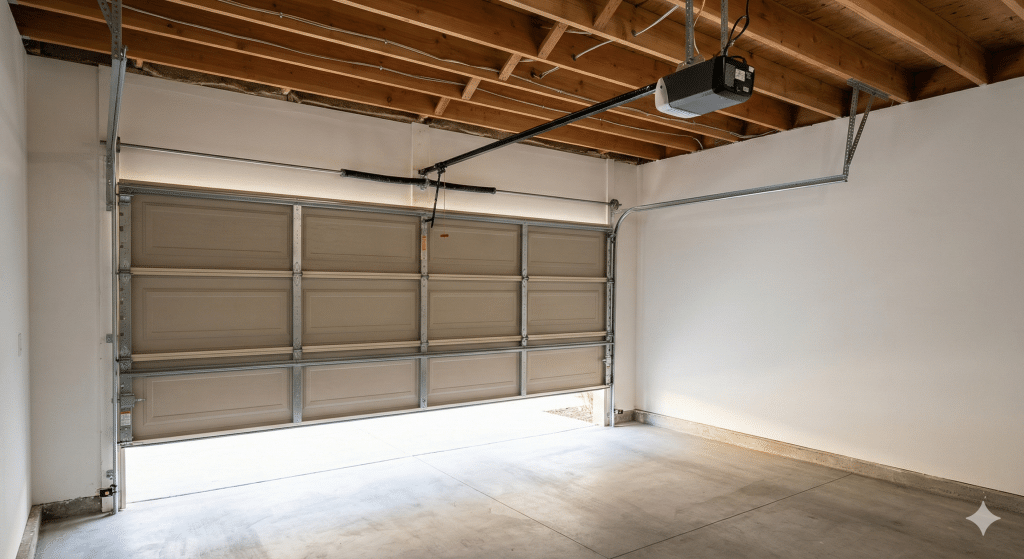
Every garage door opener consists of several essential components working together. The motor unit houses the electric motor, logic board, and drive mechanism. Motors range from 1/2 horsepower for lightweight single doors to 1-1/4 horsepower for heavy insulated double doors.
The drive system connects the motor to the door through a trolley that travels along a rail. This rail mounts to your garage ceiling and attaches to the door via a curved arm. The trolley contains a release mechanism allowing manual operation during power outages.
Remote controls and wall consoles send signals to the motor unit. Modern systems use rolling code technology that changes the access code with each use, preventing code theft. The safety sensors mount near the floor on each side of the door opening, creating an invisible beam that stops and reverses the door if anything breaks the beam during closing.
Additional components include the light socket for automatic illumination, antenna for receiving remote signals, and limit switches that tell the opener when the door has reached fully open or closed positions.
The Basic Operating Mechanism Explained
When you activate your garage door opener, a sequence of events happens in milliseconds. The receiver picks up the coded signal from your remote or wall switch. The logic board verifies the code matches and checks that safety conditions are met. If everything checks out, the motor engages.
The motor turns a drive mechanism, which could be a chain, belt, screw, or direct-drive system depending on your opener type. This mechanism moves the trolley along the rail. The trolley connects to the door’s top section through a curved door arm, pulling the door up or pushing it down.
As the door moves, the opener monitors its position through limit switches or encoder systems. When the door reaches the programmed open or closed position, the motor stops. The force settings determine how much resistance the opener will push through before reversing, an important safety feature that prevents the door from crushing objects or people.
During closing, the photo-eye sensors continuously monitor the door’s path. If anything breaks the infrared beam between the sensors, the door immediately stops and reverses to the open position. This federal safety requirement has prevented countless injuries since becoming mandatory in 1993.
Safety Features Built Into Modern Openers
Federal safety standards under UL 325 require specific safety features on all garage door openers sold in the United States. These requirements exist because garage doors are the largest moving object in most homes and can cause serious injury or death if safety systems fail.
Photo-eye sensors create an invisible beam across the door opening approximately six inches above the floor. When anything interrupts this beam during closing, the door reverses immediately. These sensors require proper alignment and clean lenses to function correctly.
Auto-reverse mechanisms use force sensitivity to detect obstructions. If the door contacts an object while closing, it reverses direction. You can test this by placing a 2×4 flat on the ground in the door’s path. The door should reverse upon contact. If it doesn’t, the force settings need adjustment.
Manual release allows you to disconnect the door from the opener during power outages or emergencies. A red cord hanging from the trolley activates this release. Knowing how to use this feature is essential for every household member.
Rolling code technology changes the access code transmitted between your remote and opener with each use. This prevents thieves from capturing and replaying your code to gain entry. Older fixed-code systems are vulnerable to code grabbing devices.
Timer-to-close features automatically close the door after a set period, preventing accidental overnight openings. Motion-detecting lights illuminate the garage when movement is detected, improving safety and security.
Types of Garage Door Openers
Garage door openers fall into five main categories based on their drive mechanism. Each type offers distinct advantages in noise level, maintenance requirements, speed, and price. Understanding these differences helps you choose the right opener for your specific situation.
The drive mechanism is the system that transfers power from the motor to the trolley that moves your door. This single component determines most of the opener’s operating characteristics, including how much noise it makes, how often it needs maintenance, and how long it will last.
Chain Drive Openers
Chain drive openers use a metal chain, similar to a bicycle chain, to move the trolley along the rail. This proven technology has been the industry standard for decades and remains the most affordable option for homeowners.
Advantages include lower purchase price, typically $150 to $250 for the unit alone, and proven reliability. Chain drives handle heavy doors well and replacement parts are widely available. The mechanical simplicity means fewer components that can fail.
Disadvantages center on noise. The metal chain creates significant vibration and sound during operation. This makes chain drives a poor choice for garages attached to living spaces or bedrooms. The chain also requires periodic lubrication and tension adjustment.
Chain drives work best for detached garages where noise isn’t a concern, budget-conscious homeowners, and situations where maximum lifting power is needed. They typically last 10 to 15 years with proper maintenance.
Belt Drive Openers
Belt drive openers replace the metal chain with a rubber or fiberglass-reinforced belt. This simple change dramatically reduces operating noise while maintaining reliable performance.
Advantages include near-silent operation, making belt drives ideal for attached garages. The belt requires no lubrication and creates less vibration than chain systems. Many homeowners report being unable to hear the opener from inside the house.
Disadvantages include higher cost, typically $200 to $400 for the unit. Belts can stretch over time in extreme temperature conditions, though modern reinforced belts minimize this issue. Replacement belts cost more than chains.
Belt drives suit attached garages, homes with bedrooms above or adjacent to the garage, and homeowners who prioritize quiet operation. Expected lifespan matches chain drives at 10 to 15 years.
Screw Drive Openers
Screw drive openers use a threaded steel rod to move the trolley. The motor rotates the rod, and the trolley travels along the threads. This design has fewer moving parts than chain or belt systems.
Advantages include minimal maintenance requirements since there’s no chain to lubricate or belt to replace. Screw drives operate faster than chain or belt systems, completing a full cycle in about 10 seconds. The simple mechanism means fewer parts that can wear out.
Disadvantages include noise levels between chain and belt drives. Screw drives are sensitive to temperature fluctuations, which can affect the lubrication on the threaded rod. In areas with extreme temperature swings, performance may vary seasonally.
Screw drives work well for homeowners who want low maintenance and faster operation. They’re a middle-ground option for noise sensitivity. Lifespan averages 10 to 12 years.
Direct Drive (Jackshaft) Openers
Direct drive openers, also called jackshaft openers, mount on the wall beside the garage door rather than on the ceiling. The motor directly drives the torsion bar that lifts the door, eliminating the rail, trolley, and traditional drive mechanism entirely.
Advantages include the quietest operation of any opener type since there’s no rail-mounted mechanism creating vibration. Wall mounting frees up ceiling space for storage, tall vehicles, or overhead lighting. Direct drives work with doors that have low headroom where traditional openers won’t fit.
Disadvantages include the highest cost, typically $300 to $500 or more for the unit. Installation is more complex and usually requires professional service. Not all garage door configurations support direct drive installation.
Direct drives suit garages with limited headroom, homeowners wanting maximum ceiling clearance, and those prioritizing the quietest possible operation. These units often last 15+ years due to fewer moving parts.
Wall-Mount Openers
Wall-mount openers share similarities with direct drive systems but may use different mechanisms to operate the door. They mount beside the door opening and connect to the torsion system or use a cable-driven mechanism.
Advantages mirror direct drive benefits: ceiling space preservation, quiet operation, and suitability for low-headroom situations. Some wall-mount models offer easier installation than true direct drive systems.
Disadvantages include higher cost than traditional ceiling-mount openers and potential compatibility limitations with certain door types. Professional installation is typically recommended.
Wall-mount openers appeal to the same homeowners as direct drive systems: those with space constraints or noise sensitivity who are willing to invest more for these benefits.
How to Choose the Right Garage Door Opener
Selecting the right garage door opener involves matching the unit’s capabilities to your door’s requirements and your household’s preferences. The wrong choice leads to premature wear, inadequate performance, or unnecessary expense. Taking time to evaluate your specific needs ensures satisfaction with your investment.
Start by assessing your current situation. Measure your door, note its material and insulation level, and consider how your garage connects to your living space. These factors directly influence which opener type and power level you need.
Matching Horsepower to Door Weight and Size
Garage door opener motors are rated in horsepower (HP), with residential units typically ranging from 1/2 HP to 1-1/4 HP. Choosing adequate power ensures smooth operation and prevents motor strain that shortens lifespan.
1/2 HP openers handle single uninsulated steel or aluminum doors weighing up to approximately 300 pounds. These entry-level units work for basic applications but may struggle with heavier doors.
3/4 HP openers suit most standard residential doors, including single insulated doors and lighter double doors. This mid-range option provides a safety margin for doors up to approximately 400 pounds.
1 HP openers handle heavy insulated double doors, wood doors, and carriage-style doors. If your door weighs between 400 and 500 pounds, this power level prevents motor strain.
1-1/4 HP openers are designed for the heaviest residential doors, including oversized custom doors and heavily insulated units. These premium motors provide maximum lifting power and longest service life.
When in doubt, choose more power rather than less. An overpowered opener runs cooler and lasts longer than one constantly working at maximum capacity. Your door’s weight appears on a label inside the door or can be calculated based on material and size.
Noise Level Considerations for Attached Garages
If your garage shares a wall with living spaces or sits beneath bedrooms, noise becomes a primary selection factor. The drive mechanism determines most of the operating sound.
Chain drives produce the most noise, typically 50 to 60 decibels during operation. This is comparable to normal conversation volume but includes vibration that transmits through the ceiling and walls.
Belt drives operate at 40 to 50 decibels, roughly equivalent to a quiet office. The rubber belt absorbs vibration, preventing sound transmission through the structure.
Direct drive and wall-mount systems achieve the lowest noise levels, often under 40 decibels. Without a rail-mounted mechanism, there’s minimal vibration to transmit.
Consider when you typically use the garage. Early morning departures or late-night arrivals make quiet operation more valuable. If family members sleep near the garage, investing in a quieter opener improves everyone’s quality of life.
Smart Home Compatibility and Connectivity Features
Modern garage door openers offer connectivity features that transform a simple motor into an integrated smart home device. These features add convenience and security but vary significantly between models and brands.
Wi-Fi enabled openers connect to your home network and allow smartphone control from anywhere. You can open, close, and monitor your door remotely. Receive alerts when the door opens or closes. Some systems include camera integration for visual confirmation.
Smart home platform integration allows your opener to work with Amazon Alexa, Google Assistant, Apple HomeKit, or other ecosystems. Voice commands, automation routines, and integration with other smart devices become possible.
Geofencing uses your smartphone’s location to trigger automatic actions. The door can open as you approach home or alert you if you’ve driven away with the door open.
Guest access features let you grant temporary access to visitors, delivery drivers, or service providers without sharing permanent codes. Activity logs show who accessed the garage and when.
Consider your current smart home setup and future plans. Choosing an opener compatible with your existing ecosystem simplifies integration. If you don’t currently use smart home technology, a basic Wi-Fi enabled opener provides smartphone control without requiring additional equipment.
Climate and Environmental Factors in Valley Springs, CA
Valley Springs experiences hot, dry summers and cool winters with occasional frost. These conditions influence opener selection and maintenance requirements.
Temperature extremes affect lubricants and some drive mechanisms. Screw drive openers may need seasonal lubrication adjustments as temperatures change. Belt drives with rubber components perform consistently across temperature ranges.
Dust and debris from the rural environment can accumulate on sensors and moving parts. Openers with sealed motors and protected components require less frequent cleaning.
Power reliability in rural areas makes battery backup systems valuable. Extended outages leave you unable to access your garage without manual release. Battery backup ensures continued operation during outages.
Sun exposure on south-facing garages can heat the space significantly. Openers rated for higher temperature operation handle these conditions better. Adequate garage ventilation also helps protect the opener.
For Valley Springs specifically, belt drive or direct drive openers with battery backup provide the best combination of quiet operation, temperature tolerance, and power outage protection.
Garage Door Opener Installation: Professional vs. DIY
Installing a garage door opener involves electrical work, precise mounting, and safety system calibration. While manufacturers market some units as DIY-friendly, the complexity and safety implications make professional installation the better choice for most homeowners.
Understanding what installation involves helps you make an informed decision about whether to tackle the project yourself or hire a qualified contractor.
What Professional Installation Includes
Professional installation from a qualified contractor covers every aspect of getting your new opener operational safely and correctly.
Pre-installation assessment verifies your door is properly balanced and in good condition. An unbalanced door strains the opener and shortens its lifespan. Professionals identify and address door issues before installing the opener.
Proper mounting ensures the rail is level, securely attached to the ceiling framing, and correctly aligned with the door. Improper mounting causes premature wear, noise, and potential failure.
Electrical connections meet code requirements for your area. This may include installing a dedicated circuit, proper grounding, and appropriate outlet placement. Incorrect wiring creates fire and shock hazards.
Safety system calibration sets the force limits and tests the auto-reverse and photo-eye functions. These settings must be precise to protect your family while allowing normal operation.
Programming and testing includes setting up remotes, wall consoles, and any smart features. The installer verifies everything works correctly before leaving.
Warranty protection often requires professional installation. Many manufacturers void warranties if damage results from improper installation. Professional installation documentation protects your investment.
Risks of Improper Installation
DIY installation errors range from minor inconveniences to serious safety hazards. Understanding these risks helps you evaluate whether the potential savings justify the dangers.
Mounting failures occur when the opener isn’t properly secured to structural framing. The unit can fall, damaging vehicles, injuring people, or destroying the opener. Ceiling drywall alone cannot support an opener’s weight and vibration.
Electrical hazards from improper wiring include shock risk, fire danger, and damage to the opener’s electronics. Garage circuits often have specific requirements that differ from standard household wiring.
Incorrect force settings create two opposite dangers. Settings too high allow the door to crush objects or people without reversing. Settings too low cause the door to reverse unnecessarily or fail to close completely.
Misaligned safety sensors may appear to work during testing but fail under real conditions. The door might not reverse when a child or pet enters the path, or it might refuse to close at all.
Improper door attachment can cause the door arm to disconnect during operation, allowing the door to fall. This creates immediate danger and can damage the door and opener.
Voided warranties leave you paying for repairs that would otherwise be covered. Most manufacturers specifically exclude damage from improper installation.
When to Call a Professional Contractor
Certain situations clearly require professional installation regardless of your DIY experience level.
First-time installations where no opener currently exists require running electrical circuits, mounting hardware in potentially difficult locations, and configuring everything from scratch.
Older homes may have non-standard framing, outdated electrical systems, or garage configurations that complicate installation. Professionals adapt to these challenges.
High-lift or vertical-lift doors require specialized openers and installation techniques. Standard installation procedures don’t apply.
Heavy or oversized doors need precise balancing and force calibration. The margin for error is smaller with heavier doors.
Smart home integration beyond basic Wi-Fi setup may require network configuration, app setup, and troubleshooting that exceeds typical homeowner expertise.
Any uncertainty about your ability to complete the installation safely and correctly justifies professional help. The cost difference between DIY and professional installation is typically $100 to $200, a small price for safety and peace of mind.
Essential Garage Door Opener Maintenance
Regular maintenance extends your opener’s lifespan, prevents unexpected failures, and ensures safety systems function correctly. Most maintenance tasks take only minutes but provide significant benefits.
Establishing a maintenance routine helps you catch problems early when they’re inexpensive to fix. Neglected openers fail at inconvenient times and often require more extensive repairs.
Recommended Maintenance Schedule
A structured maintenance schedule ensures nothing gets overlooked. Different tasks require different frequencies based on wear patterns and safety importance.
Monthly tasks include visual inspection of the opener, rail, and door attachment. Look for loose hardware, unusual wear patterns, or debris accumulation. Test the door’s balance by disconnecting the opener and manually lifting the door halfway. It should stay in place. If it falls or rises, the springs need adjustment.
Quarterly tasks include lubricating moving parts, testing safety features, and cleaning photo-eye sensors. Check remote and wall switch batteries. Inspect the weatherseal at the bottom of the door.
Annual tasks include a comprehensive inspection of all components, tightening all hardware, checking electrical connections, and testing battery backup systems. Consider scheduling professional maintenance annually to catch issues you might miss.
Seasonal adjustments may be needed as temperatures change. Force settings that work in summer may need adjustment in winter when lubricants thicken. Listen for changes in operating sound that indicate adjustment needs.
Lubrication and Hardware Inspection
Proper lubrication reduces wear, quiets operation, and prevents rust. Using the right lubricant in the right places matters.
Use white lithium grease or silicone-based lubricant specifically designed for garage doors. Avoid WD-40 and similar penetrating oils, which attract dust and don’t provide lasting lubrication.
Lubricate the rail where the trolley travels. Apply a thin coat and wipe away excess. For chain drives, lubricate the chain itself.
Lubricate door components including hinges, rollers, and springs. These aren’t part of the opener but affect its operation. Binding or squeaking door parts make the opener work harder.
Inspect and tighten hardware including the mounting brackets, rail connections, and door arm attachment. Vibration loosens fasteners over time. A loose connection can fail suddenly.
Check the trolley for wear and proper engagement with the drive mechanism. The trolley should move smoothly without binding or excessive play.
Testing Safety Reversal Systems
Safety system testing should happen monthly. These features protect your family from serious injury, and failures aren’t always obvious during normal operation.
Photo-eye sensor test: With the door open, press the close button. While the door is closing, break the beam between the sensors with your foot or an object. The door should immediately stop and reverse. If it doesn’t, check sensor alignment and clean the lenses.
Force reversal test: Place a 2×4 flat on the ground in the door’s path. Close the door. When it contacts the board, it should reverse within two seconds. If the door pushes through the board or takes longer to reverse, the force settings need adjustment.
Manual release test: Pull the emergency release cord and verify the door disconnects from the opener. Practice opening and closing the door manually. Reconnect by running the opener until the trolley re-engages.
Document your tests with dates and results. This record helps identify gradual changes that might indicate developing problems.
Battery Backup and Remote Maintenance
Battery backup systems and remotes require periodic attention to ensure they work when needed.
Battery backup units typically use sealed lead-acid batteries that last 2 to 5 years. Test the backup by unplugging the opener and operating the door. If the backup fails to engage or the door moves slowly, replace the battery. Some units display battery status on the wall console.
Remote control batteries usually last 1 to 2 years depending on usage. Replace batteries proactively rather than waiting for failure. Keep spare batteries on hand.
Reprogram remotes if you notice reduced range or inconsistent response. Interference from new electronics in your home can affect signal strength. Consult your owner’s manual for reprogramming procedures.
Keypad batteries in exterior keypads need replacement every 1 to 2 years. Test the keypad regularly, especially before extended trips when you might rely on it for entry.
Warning Signs Your Garage Door Opener Needs Repair
Recognizing early warning signs allows you to address problems before they become emergencies. Openers rarely fail without warning. Learning to interpret the signals your opener sends helps you schedule repairs at convenient times rather than dealing with sudden failures.
Pay attention to changes in how your opener sounds, moves, and responds. Any deviation from normal operation deserves investigation.
Unusual Noises and What They Indicate
Different sounds point to different problems. Learning to distinguish between them helps you communicate effectively with repair technicians and understand the urgency of repairs.
Grinding noises suggest metal-on-metal contact, often from worn gears in the motor unit or a dry chain. Continuing to operate with grinding sounds accelerates damage.
Squealing or screeching typically indicates dry bearings or rollers. Lubrication may resolve the issue, but worn bearings need replacement.
Popping or snapping sounds during operation can indicate worn springs, loose hardware, or problems with the door itself rather than the opener.
Humming without movement means the motor is receiving power but can’t turn the drive mechanism. This could indicate a stripped gear, jammed trolley, or motor failure.
Clicking from the motor unit without any other response often points to electrical issues, a failed capacitor, or logic board problems.
Rattling or vibrating more than usual suggests loose mounting hardware or worn components. Tighten all accessible fasteners and observe whether the noise continues.
Slow or Inconsistent Operation
Changes in operating speed or consistency indicate developing problems that will worsen without attention.
Gradual slowing over time suggests motor wear, drive mechanism problems, or an unbalanced door putting extra strain on the opener. Compare current cycle time to when the opener was new.
Hesitation at startup before the door begins moving can indicate capacitor problems, motor issues, or binding in the drive mechanism.
Stopping mid-cycle and then continuing suggests the opener is hitting force limits, possibly due to door balance issues, track problems, or incorrect settings.
Reversing unexpectedly during closing when nothing is in the door’s path indicates force settings are too sensitive or the door is binding somewhere in its travel.
Inconsistent response to remotes may indicate remote battery issues, antenna problems, or interference. Test with the wall switch to isolate the problem.
Safety Sensor Malfunctions
Safety sensor problems require immediate attention because they directly affect your family’s protection.
Flashing indicator lights on the sensors or motor unit typically indicate alignment problems. The sensors must point directly at each other to function.
Door won’t close but opens normally almost always indicates a sensor issue. Check for obstructions, dirty lenses, misalignment, or damaged wiring.
Door closes without reversing when the beam is broken represents a serious safety failure. Stop using the opener until the sensors are repaired or replaced.
Intermittent sensor function where the door sometimes closes and sometimes won’t suggests loose wiring connections, marginal alignment, or sensors affected by sunlight.
Sensor lights not illuminated indicate power problems, failed sensors, or wiring damage. Check connections at both the sensors and the motor unit.
Remote and Wall Switch Problems
Control problems can originate in the remotes, wall switch, or the opener’s receiver.
Remote works intermittently while the wall switch works consistently points to remote battery issues, range problems, or interference.
Wall switch works intermittently while remotes work consistently suggests wiring problems between the switch and motor unit.
Neither remote nor wall switch works but the opener responds to the manual release indicates motor or logic board failure.
Reduced remote range can result from weak batteries, antenna problems, or new sources of radio interference in your area.
Keypad not responding may indicate dead batteries, worn buttons, or programming issues. Try reprogramming before replacing the unit.
Garage Door Opener Lifespan and Replacement Timing
Understanding how long openers last and what affects their lifespan helps you plan for replacement and make informed repair decisions. Knowing when repair makes sense versus when replacement is the better investment saves money over time.
Average lifespan varies by opener type, usage patterns, and maintenance history. Environmental factors and installation quality also play significant roles.
Average Lifespan by Opener Type
Different drive mechanisms have different wear characteristics that affect longevity.
Chain drive openers typically last 10 to 15 years. The chain and sprockets wear over time, and the motor handles significant vibration. Well-maintained units often exceed 15 years.
Belt drive openers also average 10 to 15 years. Belts may need replacement before the motor fails, but this is a relatively inexpensive repair that extends the opener’s useful life.
Screw drive openers average 10 to 12 years. The threaded rod and trolley mechanism wear with use. Temperature-related expansion and contraction can accelerate wear in some climates.
Direct drive openers often last 15 to 20 years due to fewer moving parts and reduced vibration. The higher initial cost is offset by longer service life.
These averages assume typical residential use of 3 to 5 cycles per day. Higher usage shortens lifespan proportionally. Commercial applications may see significantly shorter service life.
Factors That Shorten Opener Life
Several factors accelerate wear and reduce how long your opener lasts.
Unbalanced doors force the opener to work harder on every cycle. The motor strains against the weight imbalance, generating excess heat and wear. Annual balance checks prevent this common problem.
Lack of maintenance allows small problems to become big ones. Dry chains wear faster. Dirty sensors cause repeated cycling. Loose hardware creates damaging vibration.
Undersized openers working at maximum capacity on every cycle wear out faster than properly sized units. The motor runs hotter and components experience more stress.
Extreme temperatures affect lubricants and some materials. Garages that experience temperature extremes put more stress on openers than climate-controlled spaces.
Power surges damage electronic components. Surge protectors on the opener’s circuit provide inexpensive protection against this common cause of premature failure.
Excessive cycling from frequent use, malfunctioning sensors causing repeated open-close cycles, or children playing with remotes accelerates wear on all components.
Signs It’s Time for Replacement vs. Repair
Deciding between repair and replacement involves comparing repair costs to the opener’s remaining useful life and the benefits of newer technology.
Repair makes sense when:
- The opener is less than 7 to 8 years old
- Repair cost is less than 50% of replacement cost
- The problem is isolated to one component
- The opener otherwise meets your needs
Replacement makes sense when:
- The opener is more than 10 to 12 years old
- Multiple components are failing
- Repair costs approach replacement cost
- You want features your current opener lacks
- Safety features are outdated or non-functional
- The opener lacks rolling code security
Always replace if safety features can’t be repaired to proper function. No cost savings justify compromised safety.
Garage Door Opener Costs in Valley Springs, CA
Understanding local costs helps you budget appropriately and evaluate quotes from contractors. Prices vary based on opener type, features, and installation complexity.
Valley Springs pricing generally aligns with broader California markets, though rural location can affect labor costs and availability.
Opener Unit Price Ranges by Type
Opener prices vary significantly based on drive type, power, and features.
Chain drive openers range from $150 to $300 for the unit. Basic models start around $150, while units with more power and features reach $300.
Belt drive openers range from $200 to $400. The quieter operation commands a premium over chain drives. Smart-enabled belt drives occupy the higher end.
Screw drive openers range from $180 to $350. Fewer manufacturers produce screw drives, limiting options but ensuring reasonable quality across the range.
Direct drive and wall-mount openers range from $300 to $600 or more. The premium price reflects quieter operation, space savings, and longer expected lifespan.
Smart features add $50 to $150 to base prices. Wi-Fi connectivity, smartphone apps, and smart home integration are increasingly standard on mid-range and premium units.
Battery backup adds $50 to $100 to the opener cost or can be purchased separately for $100 to $200.
Professional Installation Cost Factors
Installation costs depend on several factors beyond the opener’s price.
Basic installation of a replacement opener where existing wiring and mounting points are reused typically costs $100 to $200 for labor.
New installations requiring electrical work, mounting hardware installation, and more extensive setup range from $200 to $400 for labor.
Complex installations involving high ceilings, unusual door configurations, or significant electrical work can exceed $400 for labor.
Removal and disposal of old openers adds $25 to $75 to the total cost.
Total installed cost for a mid-range belt drive opener with professional installation typically falls between $400 and $700 in Valley Springs.
Long-Term Value: Quality vs. Budget Options
The cheapest opener isn’t always the best value when you consider total cost of ownership.
Budget openers save money upfront but often have shorter warranties, fewer features, and shorter lifespans. A $150 opener lasting 8 years costs more per year than a $300 opener lasting 15 years.
Mid-range openers from established brands offer the best balance of features, reliability, and cost for most homeowners. Expect 10 to 15 year lifespans with reasonable maintenance.
Premium openers make sense for demanding applications, noise-sensitive situations, or homeowners who want the latest technology. Higher upfront costs are offset by longer service life and better features.
Warranty coverage varies significantly. Budget openers may offer 1 to 2 year warranties while premium units include 5 year or lifetime motor warranties. Factor warranty value into your comparison.
Smart Garage Door Openers and Modern Technology
Smart technology has transformed garage door openers from simple motors into connected home devices. These features add convenience, security, and peace of mind for homeowners willing to invest in the technology.
Understanding available features helps you decide which capabilities justify their cost for your situation.
Wi-Fi Enabled Openers and App Control
Wi-Fi connectivity is the foundation of smart garage door opener features. Once connected to your home network, the opener communicates with smartphone apps and cloud services.
Smartphone control lets you open, close, and monitor your garage door from anywhere with internet access. Forgot to close the door after leaving for vacation? Check and close it from your phone.
Real-time status shows whether your door is open or closed at any moment. Some apps display how long the door has been in its current position.
Activity logs record every open and close event with timestamps. Review who accessed the garage and when. Some systems identify which remote or user triggered each event.
Alerts and notifications inform you when the door opens or closes, when it’s been open too long, or when someone uses a specific access code.
Guest access allows you to grant temporary access to visitors, delivery drivers, or service providers. Set time limits and receive notifications when access is used.
Integration with Home Security Systems
Smart openers can become part of your broader home security ecosystem.
Security system integration allows your garage door status to factor into arm/disarm routines. The system can alert you if the garage opens while you’re away or automatically arm when the door closes.
Camera integration pairs door status with visual confirmation. See who’s entering your garage, not just that the door opened.
Smart home platform compatibility with Amazon Alexa, Google Assistant, or Apple HomeKit enables voice control and automation routines. “Alexa, close the garage door” or automatic closing when you say goodnight.
Geofencing uses your smartphone’s location to trigger actions. The door can open as you approach home or alert you if you’ve driven away with it open.
IFTTT integration (If This Then That) connects your opener to hundreds of other services and devices for custom automation.
Battery Backup Systems for Power Outages
Power outages leave standard openers non-functional, requiring manual operation. Battery backup systems maintain powered operation during outages.
Integrated battery backup is built into some opener models. The battery charges continuously and automatically engages during power loss. Expect 20 to 50 cycles on battery power depending on the system and door weight.
Add-on battery backup units work with existing openers. These retrofit solutions provide similar functionality to integrated systems.
Automatic transfer between AC power and battery happens seamlessly. You may not even notice the power is out until you see other devices affected.
Battery lifespan for backup systems is typically 2 to 5 years. Status indicators show battery health. Replace batteries proactively to ensure backup availability.
For Valley Springs, where rural power infrastructure can be affected by storms and high demand periods, battery backup provides valuable insurance against being locked out of your garage.
Garage Door Opener Safety for Families and Property
Garage door openers present unique safety considerations due to the size and weight of the doors they control. Understanding these risks and the features designed to address them helps you protect your family and property.
Safety isn’t just about the opener itself. How you use and maintain the system, and how you educate family members, matters equally.
Child Safety Features and Best Practices
Children face particular risks around garage doors due to their size, curiosity, and limited understanding of dangers.
Photo-eye sensors positioned 6 inches above the floor detect children and pets in the door’s path. Ensure sensors remain aligned and clean. Test monthly.
Wall-mounted controls should be positioned at least 5 feet above the floor, out of reach of young children. Never let children play with remotes or wall switches.
Pinch-resistant door panels on newer doors reduce finger entrapment risks at panel joints. If your door lacks this feature, teach children to keep hands away from panel edges.
Emergency release cords should be out of children’s reach. The red cord can be a tempting target for curious kids. Some covers are available to reduce accessibility while maintaining adult access.
Education is essential. Teach children that garage doors are not toys, to never run under a moving door, and to tell an adult if they see the door behaving unusually.
Supervision around the garage door is important for young children. Never leave children unattended in the garage with the door operating.
Security Features to Prevent Break-Ins
Garage doors can be vulnerable entry points for burglars. Modern openers include features to reduce this risk.
Rolling code technology changes the access code with each use, preventing thieves from capturing and replaying your remote’s signal. Openers manufactured after 1996 should have this feature.
Vacation mode disables remote access while you’re away, requiring the wall switch or keypad for operation. This prevents break-ins even if someone obtains your remote.
Automatic closing after a set time prevents accidentally leaving the door open. Timers typically range from 1 to 10 minutes.
Motion-activated lights deter intruders and improve visibility when you arrive home after dark.
Smartphone alerts notify you of unexpected door activity. If the door opens while you’re at work, you’ll know immediately.
Emergency release vulnerability exists on some older openers where the release can be triggered from outside using a coat hanger through the weatherseal. Newer designs and aftermarket locks address this weakness.
Carbon Monoxide and Ventilation Considerations
Attached garages present carbon monoxide risks that relate to garage door operation.
Never run vehicles in a closed garage, even briefly. Carbon monoxide accumulates rapidly and can reach dangerous levels in minutes.
Open the door first before starting your vehicle. Wait for the door to fully open before starting the engine.
Close the door promptly after pulling in, but ensure adequate ventilation if you’ll be working in the garage with the vehicle.
Carbon monoxide detectors in the garage and adjacent living spaces provide essential warning. Place detectors according to manufacturer instructions.
Ventilation in attached garages helps prevent CO accumulation. Some building codes require specific ventilation provisions.
Smart opener integration with CO detectors can automatically open the garage door if dangerous CO levels are detected, providing emergency ventilation.
Frequently Asked Questions About Garage Door Openers
How long do garage door openers typically last?
Most garage door openers last 10 to 15 years with proper maintenance. Direct drive models often exceed 15 years due to fewer moving parts. Usage frequency, maintenance habits, and environmental conditions all affect actual lifespan.
How much does it cost to replace a garage door opener in Valley Springs?
Total replacement cost including a mid-range opener and professional installation typically ranges from $400 to $700 in Valley Springs. Budget options start around $300 installed, while premium smart openers with advanced features can exceed $800.
Can I install a garage door opener myself?
While some openers are marketed as DIY-friendly, professional installation is recommended for safety and warranty protection. Improper installation can create electrical hazards, safety system failures, and void manufacturer warranties. The $100 to $200 labor cost provides significant peace of mind.
Why does my garage door opener reverse before hitting the floor?
This usually indicates the close force setting is too sensitive or the door is binding somewhere in its travel. Check for obstructions, verify the tracks are clear and aligned, and consult your manual for force adjustment procedures. If adjustments don’t resolve the issue, call a professional.
Should I repair or replace my 12-year-old garage door opener?
At 12 years, replacement often makes more sense than major repairs. If repair costs exceed 50% of replacement cost, or if multiple components are failing, a new opener provides better value. You’ll also gain modern safety features and smart technology.
Do I need a battery backup for my garage door opener?
Battery backup is highly recommended for Valley Springs homes due to occasional power outages. Without backup, you’ll need to manually operate the door during outages. Battery backup systems add $50 to $150 to opener cost and provide 20 to 50 cycles of operation during outages.
How do I know if my garage door opener is compatible with smart home systems?
Check the manufacturer’s specifications for Wi-Fi capability and smart home platform compatibility. Openers listing Amazon Alexa, Google Assistant, or Apple HomeKit compatibility will integrate with those ecosystems. Older openers can sometimes be upgraded with add-on smart controllers.
When to Call a Professional Garage Door Contractor
Knowing when to seek professional help prevents small problems from becoming expensive emergencies. Some repairs are appropriate for handy homeowners, while others require specialized knowledge and tools.
Professional contractors bring experience, proper equipment, and warranty-backed work that protects your investment.
Services a Professional Provides
Professional garage door contractors offer comprehensive services beyond what most homeowners can safely perform.
Installation services include new opener installation, replacement of existing units, and upgrades to smart-enabled systems. Professionals ensure proper mounting, electrical connections, and safety calibration.
Repair services cover motor replacement, drive mechanism repairs, logic board replacement, and safety system restoration. Professionals diagnose problems accurately and have access to replacement parts.
Maintenance services include comprehensive inspections, lubrication, adjustment, and safety testing. Annual professional maintenance catches problems early and extends equipment life.
Emergency services address sudden failures, doors stuck open or closed, and safety concerns. Many contractors offer same-day or next-day emergency response.
Consultation services help you choose the right opener for your needs, understand options, and plan for future upgrades.
What to Expect During a Service Call
Understanding the service process helps you prepare and ensures you get maximum value from professional visits.
Initial assessment involves the technician examining your opener, door, and related components. They’ll ask about symptoms, history, and your concerns.
Diagnosis identifies the root cause of problems. Good technicians explain what they find and why it matters.
Options presentation outlines repair versus replacement choices with honest cost comparisons. Reputable contractors don’t pressure you toward unnecessary replacements.
Work completion includes the repair or installation, testing, and cleanup. The technician should demonstrate proper operation and explain any maintenance you should perform.
Documentation provides receipts, warranty information, and maintenance recommendations. Keep these records for future reference.
Typical service calls last 1 to 2 hours for repairs and 2 to 4 hours for new installations.
Choosing a Reliable Contractor in Valley Springs, CA
Selecting the right contractor ensures quality work and fair pricing.
Verify licensing and insurance. California requires contractor licensing for work over $500. Ask for license numbers and verify them through the Contractors State License Board.
Check reviews and references. Online reviews provide insight into customer experiences. Ask for local references you can contact.
Get written estimates. Reputable contractors provide detailed written estimates before beginning work. Be wary of verbal-only quotes or pressure to decide immediately.
Ask about warranties. Quality contractors stand behind their work with labor warranties in addition to manufacturer product warranties.
Confirm availability. Local contractors familiar with Valley Springs can respond faster to emergencies and understand regional conditions affecting your equipment.
Compare multiple quotes for major work. Prices should be competitive but not suspiciously low. The cheapest option isn’t always the best value.
Conclusion
Garage door openers combine mechanical systems, electrical components, and increasingly sophisticated technology to provide daily convenience and security. Understanding how these systems work, what maintenance they require, and when they need professional attention helps you maximize their lifespan and reliability.
Choosing the right opener for your Valley Springs home means balancing factors like noise levels, smart features, and climate considerations against your budget. Professional installation and regular maintenance protect your investment and ensure safety systems function when needed.
We’re here to help with all your garage door opener needs. Contact Afford-A-Door Inc for expert installation, repair, and maintenance services throughout Valley Springs and surrounding areas. Our experienced technicians provide honest recommendations and quality workmanship you can trust.