Your garage door operates approximately 1,500 times per year, making it one of the most frequently used mechanical systems in your home. Understanding how to identify problems early, perform safe maintenance, and recognize when professional repair is necessary can prevent costly emergency breakdowns and extend your door’s lifespan by years.
For property managers, real estate professionals, and homeowners in Valley Springs, CA, garage door issues directly impact property value, tenant satisfaction, and daily convenience. A malfunctioning garage door creates security vulnerabilities, energy inefficiency, and potential safety hazards that demand immediate attention.
This comprehensive guide covers everything from component identification and warning sign recognition to maintenance schedules, repair costs, and contractor selection. You’ll gain the knowledge needed to make informed decisions about your garage door system and protect your investment.
Understanding Your Garage Door System
Before diagnosing problems or scheduling repairs, you need a solid understanding of how your garage door system functions. Modern garage doors contain multiple interconnected components that must work in precise coordination. When one element fails, it often affects the entire system’s performance and safety.
Key Components of a Garage Door
Springs (Torsion and Extension)
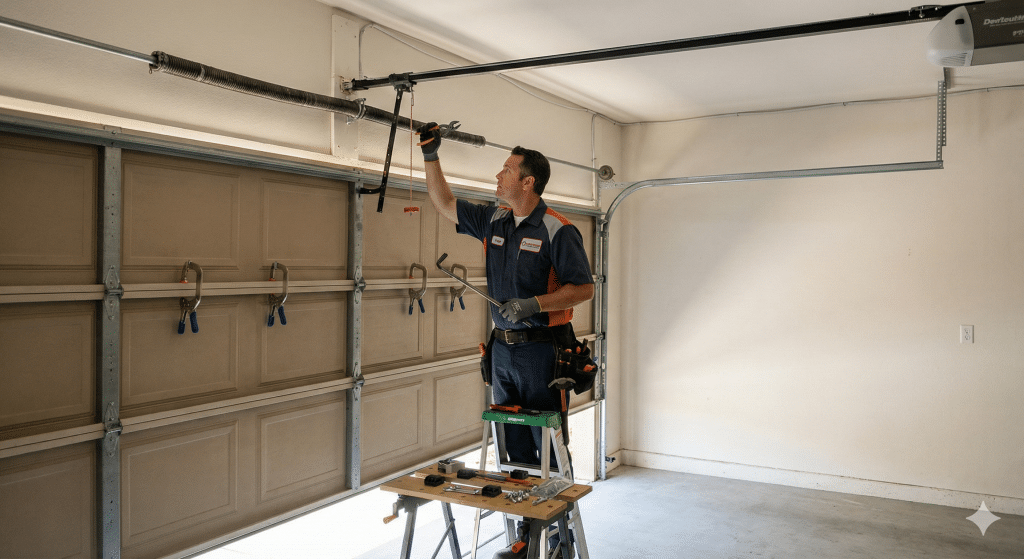
Springs are the workhorses of your garage door system. Torsion springs mount horizontally above the door opening and use torque to lift the door. Extension springs run along the horizontal tracks on both sides and stretch to provide lifting force. Most residential doors use torsion springs because they offer smoother operation, longer lifespan, and better safety characteristics.
Standard torsion springs are rated for approximately 10,000 cycles, which translates to roughly 7-9 years of typical use. High-cycle springs rated for 25,000 or more cycles are available for properties with heavy usage patterns.
Cables and Pulleys
Steel cables connect the springs to the bottom brackets of your garage door. These cables bear tremendous tension during operation. Pulleys guide the cables and reduce friction, allowing smooth movement. Cable failure is dangerous because the door can drop suddenly without spring support.
Tracks and Rollers
Vertical and horizontal tracks guide your door’s movement path. Rollers, typically made of steel, nylon, or plastic, travel within these tracks. Nylon rollers operate more quietly and require less maintenance than steel alternatives. Track alignment is critical because even minor deviations cause binding, uneven wear, and premature component failure.
Opener and Motor Assembly
The garage door opener consists of a motor, drive mechanism, and control system. Three main drive types exist: chain drive (affordable but noisy), belt drive (quiet but more expensive), and screw drive (low maintenance, moderate noise). Modern openers include smart features like smartphone connectivity, battery backup, and integration with home automation systems.
Sensors and Safety Features
Federal law requires all garage door openers manufactured after 1993 to include photoelectric sensors and auto-reverse mechanisms. Sensors mount near the floor on both sides of the door opening and detect obstructions. The auto-reverse feature stops and reverses the door if it contacts an object during closing.
Panels and Weather Sealing
Door panels provide structure, insulation, and aesthetic appeal. Materials include steel, aluminum, wood, fiberglass, and composite options. Weather sealing along the bottom, sides, and top of the door prevents air infiltration, moisture intrusion, and pest entry. Damaged seals significantly impact energy efficiency.
How Garage Door Systems Work Together
Counterbalance System Function
Your garage door weighs between 150 and 400 pounds depending on size and material. The spring system counterbalances this weight, making the door nearly weightless during operation. When properly balanced, you should be able to lift the door manually with minimal effort. An unbalanced door strains the opener motor and accelerates component wear.
Opening and Closing Cycle
When you activate the opener, the motor engages the drive mechanism, which pulls or pushes a trolley connected to the door’s top section. As the door moves upward, the springs release stored energy to assist lifting. During closing, the springs absorb energy and store it for the next opening cycle. This process repeats thousands of times throughout the system’s lifespan.
Safety Mechanism Integration
Multiple safety systems work together to prevent injuries. Photoelectric sensors create an invisible beam across the door opening. If broken during closing, the door immediately reverses. The auto-reverse mechanism detects physical resistance and reverses direction. Manual release cords allow you to disconnect the door from the opener during power outages or emergencies.
Common Garage Door Problems and Warning Signs
Recognizing problems early prevents minor issues from becoming major repairs. Most garage door failures provide warning signs days or weeks before complete breakdown. Learning to identify these signals helps you schedule repairs at convenient times rather than dealing with emergency situations.
Mechanical Issues
Broken or Worn Springs
Spring failure is the most common garage door repair. Warning signs include a door that feels unusually heavy, visible gaps in torsion springs, or a loud bang from the garage. When a spring breaks, the door becomes extremely difficult or impossible to lift manually. Never attempt to operate a door with broken springs because the opener motor cannot safely handle the full door weight.
Frayed or Snapped Cables
Cables show wear through visible fraying, rust, or kinking. A snapped cable causes the door to hang crooked or drop on one side. Cable damage often occurs alongside spring problems because both components experience similar stress levels. Inspect cables monthly for early wear indicators.
Misaligned or Bent Tracks
Track problems manifest as grinding noises, jerky movement, or the door binding during operation. Tracks can become misaligned from impact damage, loose mounting hardware, or foundation settling. Bent tracks require professional repair or replacement because improper adjustment creates safety hazards.
Worn Rollers and Hinges
Rollers typically last 10,000-15,000 cycles before requiring replacement. Worn rollers produce squeaking, grinding, or rumbling sounds. Damaged hinges cause panels to separate or bind. Replacing rollers and hinges is relatively inexpensive and dramatically improves operation smoothness.
Panel Damage and Warping
Panels suffer damage from vehicle impacts, weather exposure, and age-related deterioration. Dented panels affect appearance and can interfere with proper sealing. Warped panels create gaps that compromise insulation and security. Individual panel replacement is often possible without replacing the entire door.
Opener and Electrical Problems
Motor Failure Signs
Opener motors exhibit warning signs before complete failure. Listen for humming without movement, intermittent operation, or unusual vibrations. Overheating indicates the motor is working too hard, often due to door balance issues or worn components. Most opener motors last 10-15 years with proper maintenance.
Remote and Wall Switch Issues
When remotes stop working, first replace batteries. If problems persist, the remote may need reprogramming or replacement. Wall switch failures often indicate wiring problems or a faulty switch mechanism. Intermittent response suggests interference or range issues with wireless components.
Sensor Misalignment
Misaligned sensors prevent the door from closing and cause the opener lights to flash. Sensors can shift from vibration, accidental contact, or mounting hardware loosening. Realignment is a simple DIY task involving adjusting the sensor brackets until indicator lights show proper alignment.
Circuit Board Malfunctions
The opener’s circuit board controls all electronic functions. Power surges, moisture exposure, and age cause board failures. Symptoms include erratic behavior, failure to respond to commands, or complete non-operation. Circuit board replacement costs less than a new opener but requires professional diagnosis.
Early Warning Signs That Require Attention
Unusual Noises (Grinding, Squeaking, Popping)
Every unusual sound indicates a specific problem. Grinding suggests track or roller issues. Squeaking points to lubrication needs or worn rollers. Popping or banging often indicates spring problems or loose hardware. Document when noises occur during the opening or closing cycle to help technicians diagnose issues.
Slow or Jerky Movement
A door that moves slowly or hesitates during operation signals balance problems, track issues, or opener strain. Jerky movement indicates roller or track problems. These symptoms worsen over time and eventually lead to complete failure if not addressed.
Door Won’t Open or Close Completely
Partial operation has multiple causes including limit switch misadjustment, track obstructions, or spring problems. If the door reverses before fully closing, check for sensor obstructions or alignment issues. A door that won’t open fully may have broken springs or track problems.
Visible Wear or Rust
Regular visual inspection reveals developing problems. Rust on springs, cables, or hardware indicates moisture exposure and weakening. Worn weatherstripping allows air and water infiltration. Cracked or peeling paint on wood doors signals moisture damage requiring attention.
Increased Energy Bills (Insulation Issues)
A sudden increase in heating or cooling costs may indicate garage door insulation failure or seal damage. Gaps around the door allow conditioned air to escape and outside air to enter. This is particularly noticeable in attached garages where temperature transfer affects adjacent living spaces.
DIY Garage Door Maintenance vs. Professional Repair
Understanding which tasks you can safely perform and which require professional expertise protects both your safety and your investment. Some maintenance activities are straightforward and appropriate for homeowners. Others involve serious injury risks that make professional service essential.
Safe DIY Maintenance Tasks
Visual Inspections
Monthly visual inspections catch problems early. Examine springs for gaps, rust, or deformation. Check cables for fraying or kinking. Look at rollers for wear or damage. Inspect tracks for debris, dents, or misalignment. Note any changes from previous inspections and schedule professional evaluation for concerning findings.
Lubrication of Moving Parts
Proper lubrication reduces friction, noise, and wear. Apply garage door lubricant (not WD-40) to rollers, hinges, springs, and tracks quarterly. Use a light coating rather than heavy application. Wipe away excess lubricant to prevent dirt accumulation. This simple task significantly extends component lifespan.
Weatherstripping Replacement
Bottom seals and side weatherstripping wear out and require periodic replacement. Measure existing weatherstripping and purchase matching replacements from hardware stores. Installation involves removing old material and pressing or screwing new seals into place. Proper sealing improves energy efficiency and keeps pests out.
Sensor Cleaning and Alignment
Dirty sensor lenses cause false obstruction readings. Clean lenses with a soft cloth monthly. If sensors become misaligned, loosen mounting brackets, adjust until indicator lights show proper alignment, and retighten. Both sensors must point directly at each other for proper function.
Tightening Hardware
Vibration loosens bolts and screws over time. Quarterly, check and tighten all accessible hardware including track brackets, hinge bolts, and opener mounting hardware. Use appropriate tools and avoid overtightening, which can strip threads or crack components.
Repairs That Require Professional Service
Spring Replacement (High Tension Danger)
Garage door springs store enormous energy. A standard torsion spring under tension can cause severe injury or death if it releases unexpectedly. Professional technicians have specialized tools, training, and experience to safely replace springs. This is not a DIY project under any circumstances.
Cable Repair and Replacement
Cables operate under high tension and connect directly to the spring system. Improper cable work can cause springs to release or the door to fall. Professional technicians replace cables as part of comprehensive spring service, ensuring proper tension and alignment.
Track Realignment
While minor track adjustments seem simple, improper alignment creates safety hazards and accelerates wear. Tracks must be precisely positioned and securely mounted. Professional technicians have tools to measure alignment accurately and make corrections that ensure safe, smooth operation.
Opener Motor Replacement
Opener replacement involves electrical work, proper mounting, and system programming. Incorrect installation creates safety hazards and may void warranties. Professional installation ensures proper function, safety feature calibration, and integration with existing controls.
Panel Replacement
Replacing damaged panels requires matching existing door specifications, proper hardware installation, and system rebalancing. Panels are heavy and awkward to handle. Professional installation ensures proper fit, appearance, and function.
Safety Hazards of DIY Spring and Cable Repair
Tension-Related Injury Risks
Torsion springs under full tension store enough energy to cause fatal injuries. Springs can unwind violently if winding bars slip or break. Cables under tension can whip with tremendous force if they snap. Emergency rooms treat numerous garage door injuries annually, many from DIY repair attempts.
Proper Tool Requirements
Spring work requires specialized winding bars, vise grips, and safety equipment. Standard tools are inadequate and dangerous. Professional technicians invest in proper equipment and maintain it carefully. Improvised tools are a leading cause of DIY garage door injuries.
Why Professionals Are Essential
Beyond safety, professional technicians bring diagnostic expertise that identifies underlying problems. They carry insurance that protects you from liability. They provide warranties on parts and labor. The cost difference between DIY attempts and professional service is minimal compared to potential medical bills or property damage.
Garage Door Repair Process: What to Expect
Understanding the professional repair process helps you evaluate service quality and communicate effectively with technicians. Reputable contractors follow systematic procedures that ensure accurate diagnosis, quality repairs, and lasting results.
Professional Inspection and Diagnosis
Multi-Point Safety Inspection
Quality technicians begin with comprehensive inspection regardless of the reported problem. They examine springs, cables, rollers, tracks, hardware, panels, weatherstripping, and opener components. This systematic approach identifies problems you may not have noticed and prevents future service calls.
Component Testing
Beyond visual inspection, technicians test component function. They check door balance by disconnecting the opener and manually operating the door. They verify sensor alignment and auto-reverse function. They test opener force settings and travel limits. These tests reveal problems that visual inspection alone cannot detect.
Honest Assessment and Recommendations
Reputable technicians explain findings clearly and provide options. They distinguish between necessary repairs and recommended improvements. They provide written estimates before beginning work. They answer questions and help you understand the value of recommended services.
Common Repair Procedures
Spring Replacement Process
Spring replacement begins with securing the door in the open position and releasing tension from existing springs. Technicians remove old springs and install new ones matched to your door’s weight and size. They wind springs to proper tension, test balance, and adjust as needed. Quality technicians replace both springs even if only one has failed because the remaining spring is likely near the end of its lifespan.
Cable and Pulley Repair
Cable replacement typically accompanies spring service. Technicians inspect pulleys for wear and replace as needed. They route new cables properly and adjust tension. Proper cable installation ensures even lifting force and prevents premature wear.
Track Adjustment and Replacement
Track work involves loosening mounting hardware, repositioning tracks to proper alignment, and securing firmly. Severely damaged tracks require replacement. Technicians verify proper spacing and alignment throughout the track length, ensuring smooth roller travel.
Opener Repair and Programming
Opener service ranges from simple adjustments to complete replacement. Technicians diagnose motor, drive mechanism, and control system issues. They adjust force and travel settings, program remotes, and calibrate safety features. Modern opener installation includes smartphone app setup and home automation integration when applicable.
Panel Replacement Options
Panel replacement requires matching existing door specifications including material, color, insulation, and hardware pattern. Technicians remove damaged panels, install replacements, and verify proper alignment. They check weatherstripping and adjust as needed. Complete door replacement may be more cost-effective if multiple panels require replacement or matching panels are unavailable.
Repair Timeline and Service Expectations
Same-Day vs. Scheduled Repairs
Many common repairs can be completed same-day if parts are available. Spring replacement typically takes 1-2 hours. Opener replacement requires 2-3 hours. Complex repairs or those requiring special-order parts may require scheduling. Emergency service is available for security-critical situations but typically costs more than scheduled appointments.
Parts Availability Considerations
Standard springs, cables, rollers, and hardware are typically stocked by professional contractors. Specific opener models, unusual door sizes, or discontinued panel styles may require ordering. Quality contractors communicate parts availability and expected timelines clearly before beginning work.
Post-Repair Testing and Warranty
Professional repairs include comprehensive testing before the technician leaves. They verify proper operation through multiple cycles, test safety features, and demonstrate proper function. Reputable contractors provide written warranties covering both parts and labor. Warranty terms vary, so ask about coverage before authorizing repairs.
Garage Door Maintenance Schedule and Best Practices
Preventive maintenance extends component lifespan, prevents unexpected failures, and maintains safe operation. Following a structured maintenance schedule costs far less than emergency repairs and keeps your garage door functioning reliably for years.
Monthly Maintenance Tasks
Visual Inspection Checklist
Spend five minutes monthly examining your garage door system. Look at springs for gaps, rust, or deformation. Check cables for fraying. Examine rollers for wear or damage. Inspect tracks for debris or damage. Look at weatherstripping for gaps or deterioration. Note any changes and schedule professional evaluation for concerning findings.
Listen for Unusual Sounds
Operate your door while listening carefully. Smooth operation produces consistent, relatively quiet sound. Grinding, squeaking, popping, or scraping indicates developing problems. Changes from normal operation patterns warrant investigation. Early detection prevents minor issues from becoming major repairs.
Test Safety Reversal Feature
Place a 2×4 board flat on the ground in the door’s path. Close the door using the opener. The door should reverse immediately upon contacting the board. If it doesn’t reverse or reverses slowly, the opener requires adjustment. This test verifies the auto-reverse mechanism that prevents entrapment injuries.
Quarterly Maintenance Tasks
Lubrication Schedule
Every three months, apply garage door lubricant to moving parts. Lubricate roller bearings, hinge pivot points, spring coils, and the opener’s drive mechanism. Avoid lubricating tracks because lubricant attracts dirt and causes buildup. Use products specifically designed for garage doors rather than general-purpose lubricants.
Hardware Tightening
Vibration loosens fasteners over time. Check and tighten track mounting brackets, hinge bolts, roller brackets, and opener mounting hardware. Use appropriate tools and apply moderate torque. Overtightening can strip threads or crack components. Loose hardware causes noise, misalignment, and accelerated wear.
Weatherstrip Inspection
Examine bottom seals, side seals, and top seals for gaps, cracks, or deterioration. Check for daylight visible around closed door edges. Feel for air drafts. Replace damaged weatherstripping promptly to maintain energy efficiency and prevent moisture and pest intrusion.
Annual Professional Inspection
Spring Tension Check
Professional technicians measure spring tension and compare to specifications for your door. They identify springs approaching end of lifespan before failure occurs. Proactive spring replacement during scheduled maintenance prevents inconvenient emergency failures.
Balance Testing
Technicians disconnect the opener and manually test door balance. A properly balanced door stays in place when released at any point in its travel. Imbalance indicates spring wear or adjustment needs. Proper balance reduces opener strain and extends component lifespan.
Safety System Calibration
Annual professional service includes verifying and adjusting safety features. Technicians test sensor alignment, auto-reverse sensitivity, and force settings. They ensure compliance with current safety standards. Proper calibration prevents injuries and ensures reliable operation.
Component Lifespan Assessment
Experienced technicians estimate remaining lifespan for major components. They identify parts approaching replacement age and recommend proactive service. This information helps you budget for future repairs and avoid unexpected failures.
Seasonal Considerations for Valley Springs, CA
Summer Heat Impact on Components
Valley Springs summers bring temperatures that affect garage door components. Heat causes metal expansion, potentially affecting track alignment and spring tension. Lubricants may thin and require more frequent application. Weatherstripping can soften and deform. Schedule summer inspections to address heat-related issues before they cause problems.
Winter Temperature Fluctuations
Temperature swings between warm days and cold nights stress components through repeated expansion and contraction cycles. Metal becomes more brittle in cold weather, increasing spring failure risk. Lubricants thicken and may not flow properly. Ensure adequate lubrication before winter and monitor operation during cold snaps.
Dust and Debris Management
The Valley Springs area experiences dusty conditions that affect garage door operation. Dust accumulates on tracks, rollers, and sensors. Regular cleaning prevents buildup that causes binding and sensor malfunctions. Clean tracks and sensors monthly during dusty seasons and after significant wind events.
Garage Door Repair Costs in Valley Springs, CA
Understanding typical repair costs helps you budget appropriately and evaluate contractor estimates. Prices vary based on specific repairs needed, parts quality, and service provider. The following ranges represent typical costs in the Valley Springs area.
Average Repair Cost Ranges
Spring Replacement Costs
Torsion spring replacement typically costs $200-$400 for a single spring or $250-$500 for a pair. Extension spring replacement runs $150-$300 per pair. High-cycle springs cost more but provide longer service life. Most professionals recommend replacing both springs simultaneously even if only one has failed.
Cable Repair Costs
Cable replacement costs $150-$250 including parts and labor. Cables are typically replaced during spring service. Standalone cable replacement may cost slightly more due to minimum service charges. Quality cables matched to your spring system ensure proper function and longevity.
Opener Repair/Replacement Costs
Minor opener repairs such as gear replacement or circuit board repair cost $150-$300. Complete opener replacement ranges from $350-$800 depending on opener type and features. Smart openers with advanced features cost more but provide convenience and security benefits.
Track and Roller Costs
Roller replacement costs $100-$200 for a complete set. Track repair or adjustment runs $125-$250. Complete track replacement costs $200-$400 per track. Nylon rollers cost more than steel but operate more quietly and last longer.
Panel Replacement Costs
Individual panel replacement costs $250-$800 depending on door type, material, and availability. Multiple panel replacement may approach the cost of complete door replacement. Discontinued panel styles may require custom fabrication at premium prices.
Factors That Affect Repair Pricing
Door Type and Size
Larger doors require heavier springs and more robust components that cost more. Commercial doors have different specifications than residential doors. Specialty doors such as carriage house styles or custom designs may require specific parts at premium prices.
Parts Quality and Availability
Standard parts for common door types are readily available at competitive prices. Premium components such as high-cycle springs or quiet nylon rollers cost more but provide better performance and longevity. Obsolete or specialty parts may require special ordering with associated delays and costs.
Labor and Service Call Fees
Most contractors charge service call fees ranging from $50-$100 that apply toward repair costs. Labor rates vary by contractor and complexity. Emergency or after-hours service typically costs 25-50% more than standard appointments. Get written estimates before authorizing work.
Emergency vs. Scheduled Service
Scheduling repairs during normal business hours costs less than emergency service. Weekend and holiday service commands premium rates. When possible, schedule non-urgent repairs in advance. Reserve emergency service for security-critical situations or safety hazards.
Repair vs. Replacement: Making the Right Decision
Age of Existing Door
Garage doors typically last 15-30 years depending on material, quality, and maintenance. Doors approaching end of lifespan may not justify significant repair investment. Consider replacement if your door is over 15 years old and requires major repairs.
Frequency of Repairs
Multiple repairs within a short period suggest systemic problems or end-of-life issues. Track repair costs over time. If annual repair costs approach 50% of replacement cost, replacement becomes more economical.
Energy Efficiency Considerations
Older doors often lack adequate insulation. Modern insulated doors significantly reduce energy transfer between garage and living spaces. If your garage is attached and climate-controlled, upgrading to an insulated door may reduce energy costs enough to offset replacement expense.
Cost-Benefit Analysis Framework
Compare total repair costs against replacement cost and expected remaining lifespan. Factor in energy savings, improved appearance, and enhanced features available with new doors. Consider financing options that make replacement more accessible. Quality contractors help you evaluate options honestly without pressure.
How to Choose a Reliable Garage Door Repair Contractor
Selecting the right contractor ensures quality work, fair pricing, and reliable service. The garage door industry includes excellent professionals and less reputable operators. Knowing what to look for helps you make informed decisions.
Essential Qualifications to Verify
Licensing and Insurance Requirements
California requires contractor licensing for work exceeding $500 in labor and materials. Verify active license status through the California Contractors State License Board. Confirm general liability insurance and workers’ compensation coverage. Licensed, insured contractors protect you from liability for accidents or property damage.
Experience and Specializations
Ask how long the company has been in business and how many garage door repairs they complete annually. Experienced technicians diagnose problems accurately and complete repairs efficiently. Some contractors specialize in specific door types or brands. Match contractor expertise to your specific needs.
Manufacturer Certifications
Major garage door and opener manufacturers offer certification programs for technicians. Certified technicians receive training on specific products and have access to manufacturer support. Certification indicates commitment to professional development and quality service.
Local Reputation and Reviews
Check online reviews on Google, Yelp, and the Better Business Bureau. Look for patterns in feedback rather than individual reviews. Ask for references from recent customers. Local contractors depend on community reputation and have incentive to provide quality service.
Questions to Ask Before Hiring
Warranty and Guarantee Policies
Ask about warranty coverage for parts and labor. Quality contractors stand behind their work with meaningful guarantees. Understand what voids warranty coverage. Get warranty terms in writing before authorizing repairs.
Pricing Transparency
Request detailed written estimates before work begins. Understand what’s included in quoted prices. Ask about potential additional costs if problems are discovered during repair. Reputable contractors explain pricing clearly and don’t surprise customers with unexpected charges.
Parts Quality and Sourcing
Ask about parts brands and quality levels. Some contractors offer good-better-best options at different price points. Understand the difference between economy and premium parts. Quality parts cost more initially but often provide better value through longer service life.
Emergency Service Availability
Ask about after-hours and weekend availability. Understand emergency service pricing. Know how to reach the contractor for urgent situations. Reliable contractors provide clear communication channels for emergency needs.
Red Flags to Avoid
High-Pressure Sales Tactics
Reputable contractors provide information and let you decide. Be wary of technicians who insist repairs must be done immediately or who use scare tactics. Get second opinions for major repairs if you feel pressured.
Unusually Low Estimates
Extremely low prices often indicate inferior parts, inexperienced technicians, or bait-and-switch tactics. Quality work requires fair compensation. Compare multiple estimates and be suspicious of outliers significantly below market rates.
No Written Estimates or Contracts
Professional contractors provide written estimates detailing work to be performed, parts to be used, and total cost. Verbal agreements leave room for misunderstanding and disputes. Insist on written documentation before authorizing any work.
Lack of References or Reviews
Established contractors have track records you can verify. New companies without reviews or contractors who can’t provide references may lack experience or have reputation problems. Prioritize contractors with verifiable positive histories.
Garage Door Safety: Protecting Your Family and Property
Garage doors are the largest moving objects in most homes and present significant safety hazards when not properly maintained. Understanding risks and implementing safety measures protects your family and reduces liability exposure.
Common Garage Door Safety Hazards
Entrapment and Crushing Risks
A closing garage door exerts hundreds of pounds of force. Children, pets, and adults can be trapped beneath closing doors. Entrapment injuries range from minor to fatal. Properly functioning safety features prevent most entrapment incidents, making regular testing essential.
Spring Failure Dangers
Springs under tension store tremendous energy. When springs fail, they can release violently, causing property damage and serious injuries. Never stand near springs during operation. Keep the area around springs clear of stored items. Professional spring service minimizes failure risks.
Electrical Hazards
Garage door openers operate on household electrical current. Damaged wiring, improper installation, or moisture exposure create shock and fire hazards. Have electrical components inspected during annual professional service. Address any signs of electrical problems immediately.
Required Safety Features and Testing
Auto-Reverse Mechanism
Federal law requires garage door openers to reverse when encountering resistance during closing. Test this feature monthly by placing a 2×4 flat in the door’s path. The door should reverse immediately upon contact. Adjust opener settings or schedule service if the door doesn’t reverse properly.
Photoelectric Sensors
Sensors mounted near the floor on both sides of the door opening detect obstructions and prevent closing. Test sensors monthly by breaking the beam with your foot while the door is closing. The door should reverse immediately. Clean sensor lenses and verify alignment if sensors don’t function properly.
Manual Release Function
Every garage door opener includes a manual release that disconnects the door from the opener. This allows manual operation during power outages or opener failures. Locate your manual release and practice using it. Ensure all family members know how to operate the door manually in emergencies.
Monthly Safety Testing Protocol
Establish a monthly routine for testing safety features. Test auto-reverse with a 2×4. Test sensors by breaking the beam. Verify manual release function. Check for proper balance by disconnecting the opener and manually operating the door. Document test results and schedule service for any failures.
Child and Pet Safety Considerations
Keypad and Remote Security
Keep remotes out of children’s reach. Program keypads with codes children cannot guess. Teach children that garage doors are not toys. Consider smart openers that allow you to monitor and control access remotely. Disable vacation mode features that could allow unauthorized access.
Pinch-Resistant Panel Options
Modern garage doors offer pinch-resistant panel designs that reduce finger entrapment risks. These panels feature joints that don’t create pinch points during operation. Consider upgrading to pinch-resistant panels if you have young children or if your current door poses pinch hazards.
Safety Education for Family Members
Teach all family members about garage door safety. Children should understand to never play near or under garage doors. Everyone should know to keep hands and fingers away from panel joints. Establish rules about standing clear during door operation. Regular safety discussions reinforce safe behaviors.
Garage Door Repair for Property Managers and Real Estate Professionals
Property managers and real estate professionals face unique garage door challenges. Multiple properties, tenant relationships, and transaction requirements demand systematic approaches to maintenance, repair, and inspection.
Multi-Property Maintenance Strategies
Preventive Maintenance Programs
Establish scheduled maintenance for all properties in your portfolio. Annual professional inspections catch problems before they become emergencies. Consistent maintenance reduces total repair costs and extends equipment lifespan. Document maintenance activities for each property.
Vendor Relationship Management
Develop relationships with reliable garage door contractors who understand your needs. Negotiate volume pricing for multiple properties. Establish priority service agreements for emergency situations. Consistent vendor relationships ensure quality work and responsive service.
Budget Planning for Repairs
Allocate maintenance budgets based on property age and equipment condition. Plan for major component replacement based on typical lifespans. Reserve funds for unexpected repairs. Proactive budgeting prevents deferred maintenance that leads to larger problems.
Tenant Communication and Emergency Protocols
Reporting Procedures
Establish clear procedures for tenants to report garage door problems. Provide multiple contact methods including phone, email, and online portals. Respond promptly to reports to prevent minor issues from escalating. Document all reports and responses.
Emergency Contact Systems
Provide tenants with emergency contact information for after-hours garage door problems. Establish relationships with contractors who offer emergency service. Define what constitutes an emergency versus a routine repair request. Clear protocols ensure appropriate response to urgent situations.
Liability Considerations
Maintain garage doors in safe operating condition to minimize liability exposure. Document all maintenance and repairs. Respond promptly to safety concerns. Ensure all safety features function properly. Consult with legal counsel about liability protection strategies.
Inspection Checklist for Property Transactions
Pre-Sale Inspection Points
Before listing properties, inspect garage doors for proper operation, safety feature function, and cosmetic condition. Address obvious problems that could affect buyer perception or inspection results. Document door age, condition, and recent repairs.
Disclosure Requirements
California law requires disclosure of known material defects. Document any known garage door problems or repair history. Disclose previous repairs and current condition honestly. Consult with legal counsel about specific disclosure obligations.
Negotiation Leverage Points
Garage door condition affects property value and buyer negotiations. Well-maintained doors support asking prices. Deferred maintenance creates negotiation leverage for buyers. Professional inspection reports provide objective condition documentation for negotiations.
Conclusion: Maintaining Safe and Reliable Garage Door Operation
Your garage door system requires regular attention to operate safely and reliably. Understanding components, recognizing warning signs, and following maintenance schedules prevents costly emergency repairs and extends equipment lifespan. The investment in preventive care pays dividends through years of trouble-free operation.
Professional inspections complement your DIY maintenance efforts by identifying problems you might miss and addressing repairs that require specialized expertise. Annual professional service is particularly important for high-tension components like springs and cables where safety risks make DIY repair inappropriate.
We’re committed to helping Valley Springs property owners maintain safe, efficient garage door systems. Contact Afford-A-Door Inc today to schedule your professional inspection and ensure your garage door provides the reliable service your property deserves.
Frequently Asked Questions About Garage Door Repair
How often should a garage door be serviced?
Schedule professional garage door service annually for comprehensive inspection and maintenance. Perform monthly visual inspections and quarterly lubrication yourself. Properties with heavy usage or commercial applications may benefit from semi-annual professional service.
What is the lifespan of garage door springs?
Standard torsion springs last approximately 10,000 cycles, which translates to 7-9 years of typical residential use. High-cycle springs rated for 25,000 or more cycles last proportionally longer. Spring lifespan depends on usage frequency, proper maintenance, and environmental conditions.
Can I replace just one garage door panel?
Yes, individual panel replacement is often possible if matching panels are available. However, discontinued styles or significant color fading may make matching difficult. Multiple damaged panels may make complete door replacement more cost-effective than individual panel replacement.
Why is my garage door making loud noises?
Loud noises indicate specific problems. Grinding suggests track or roller issues. Squeaking points to lubrication needs. Popping or banging often indicates spring problems or loose hardware. Identify when noises occur during operation to help diagnose the cause.
How long does a typical garage door repair take?
Most common repairs take 1-3 hours. Spring replacement typically requires 1-2 hours. Opener replacement takes 2-3 hours. Complex repairs or those requiring special-order parts may take longer. Your technician can provide time estimates after diagnosis.
Is garage door repair covered by homeowners insurance?
Homeowners insurance typically covers garage door damage from covered perils like storms, fire, or vehicle impact. Normal wear and mechanical failure are generally not covered. Review your policy and consult your insurance agent about specific coverage questions.
What should I do if my garage door won’t open?
First, check if the opener has power and the remote batteries are fresh. Try the wall switch to rule out remote problems. Check for sensor obstructions or misalignment. If the door won’t open manually, do not force it. Contact a professional for diagnosis and repair.